Find Your Electric Recliner Sofa: Features & Brands Guide


A long day tends to make every living room decision feel simple. Sit down, put feet up, exhale. The trouble starts when a sofa looks comfortable in a showroom but doesn't fit the room, doesn't suit the household, or doesn't hold up to everyday use in South Georgia and North Florida.
That's where an electric recliner sofa earns its place. It isn't just a sofa with moving parts. It's a comfort system, a layout decision, an upholstery choice, and a long-term ownership commitment wrapped into one piece.
For many households, this is also the first major seating purchase that blends technology with traditional furniture craftsmanship. That mix can be confusing. A motor sounds straightforward until questions about controls, service access, room clearance, upholstery wear, and delivery logistics start piling up. Clear guidance matters.
Your Guide to the Ultimate Home Comfort Upgrade
A familiar scene plays out in many homes. The television is on, a book is open, or the day is finally winding down. One seat on the current sofa always feels a little too upright. Another drops the body into a position that's hard to get out of. An electric recliner sofa changes that rhythm with one quiet adjustment.

That appeal isn't niche. The global recliner sofas market was estimated at USD 11.4 billion in 2025 and is projected to reach USD 19.8 billion by 2034 according to Dataintelo's recliner sofas market analysis. For homeowners, that points to steady demand for comfort-focused seating rather than a passing furniture fad.
An electric recliner sofa also works well within a larger room plan. Readers shaping a whole space, not just replacing one seat, may find useful ideas in FrameStory's living room guide, especially when balancing seating, tables, and flow.
Why this category feels different
The difference shows up in small moments.
A reader who likes to watch a movie may want feet raised slightly without lying flat. Someone who reads in the evenings may need neck support while staying more upright. A guest recovering from a long day may want easier movement than a manual seat allows. Power motion makes those adjustments smoother and more exact.
Practical rule: A living room investment should match how the room is actually used at night, on weekends, and when guests arrive, not just how it looks at noon in a showroom.
For households furnishing a curated sanctuary rather than a temporary setup, that precision is often the feature that turns interest into confidence.
The Evolution from Manual to Power Reclining
The electric recliner sofa didn't appear out of nowhere. It sits at the end of a long furniture story that started with simpler adjustable forms and gradually moved toward easier control.
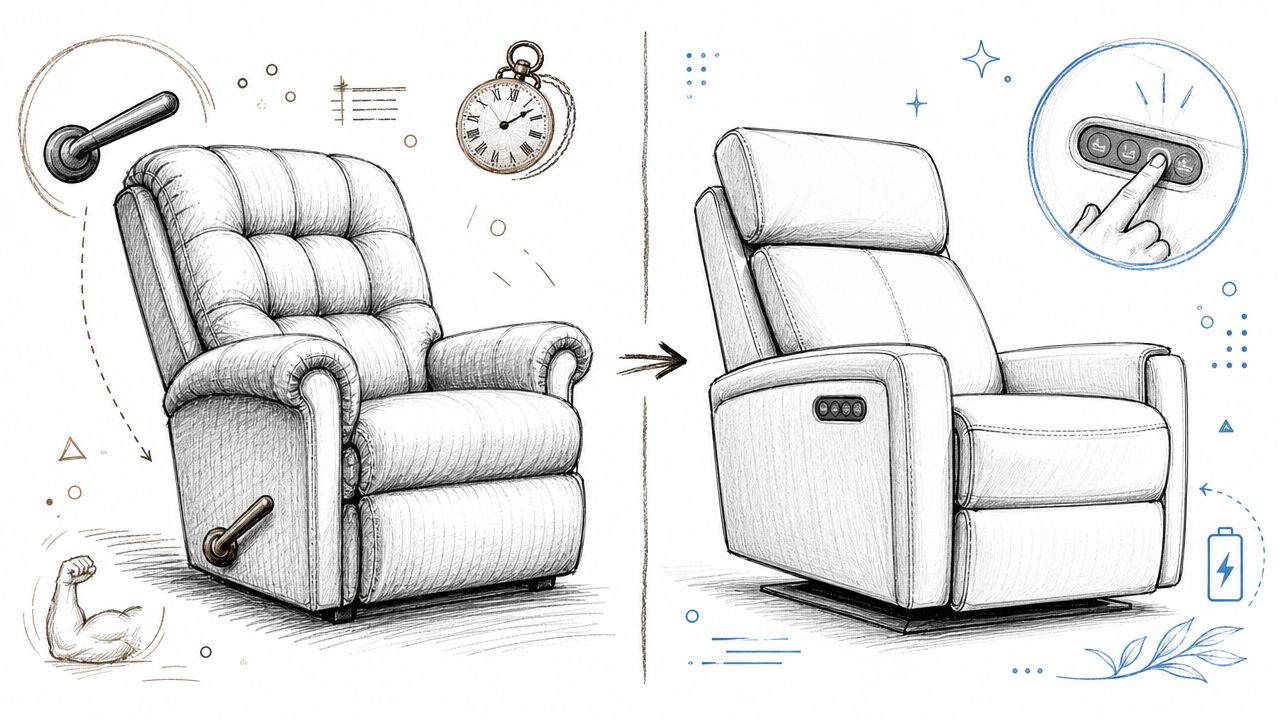
The modern recliner's lineage dates to the 1850s with adjustable military beds, with the reclining chair form developing further through the 1860s. The important shift came later, when motion moved from body force to motorized control. As explained in this overview of how manual and power reclining works, power recliners use a small electric motor or linear actuator to convert electricity into smooth, precise motion through a push-button control.
Manual reclining versus electric reclining
Manual reclining still has a place. Some households prefer mechanical simplicity, and some rooms don't lend themselves to powered furniture. But the daily experience is different.
| Feature | Manual reclining | Electric reclining |
|---|---|---|
| How it moves | Uses a lever or body pressure | Uses a motor or actuator |
| Position control | More limited stopping points | Can stop at an exact angle |
| Ease of use | Requires physical effort | Adjusts with a button |
| Feel in motion | More mechanical | Smoother and steadier |
The primary benefit isn't just convenience. It's repeatability. A manual seat may feel fine one day and awkward the next because the body lands in a slightly different spot. A powered seat can return to a preferred position with much less effort.
Why homeowners often switch once and don't go back
A common point of confusion is whether power reclining is just a luxury add-on. For many people, it isn't. It changes the usability of the sofa.
Someone with sore knees may not want to push a footrest down at the end of the night. A taller reader may need a more exact angle to avoid neck strain. A couple sharing a sofa may prefer individualized comfort rather than one compromise position.
The move from manual to motorized reclining changed the product from “a sofa that leans back” into “a seat that can be tuned.”
That tuning matters in homes where the living room serves several roles at once. Movie room. Reading corner. Conversation space. Afternoon nap spot.
The mechanism in plain language
The word actuator can sound technical, but the idea is simple. The motor creates the motion that lifts the footrest and shifts the backrest. Instead of relying on a person's weight to trigger the mechanism, the sofa does the work steadily and holds its position until the control changes it.
That's why an electric recliner sofa often feels calmer in use. There's less of the sudden release that people associate with older manual reclining furniture.
For shoppers in South Georgia and North Florida, that history also explains why established names in motion seating still matter. Brands such as La-Z-Boy, Stressless, and Smith Brothers are part of the conversation because the category has matured. Buyers aren't looking at a novelty. They're looking at the latest stage in a long design evolution.
Evaluating Key Features of an Electric Recliner Sofa
Not every electric recliner sofa is built the same way. Two sofas can look similar from the front and deliver very different ownership experiences over time. The best buying decisions usually come from looking past the silhouette and into the components that affect comfort, serviceability, and everyday use.
Start with the motion system
The motor is the working heart of the piece. Shoppers often focus on seat softness first, but the motion system deserves equal attention because it determines how the sofa performs year after year.
Some models keep the controls straightforward. Others offer more independent movement across different parts of the seat. The important question isn't which setup sounds more advanced. It's whether the controls match the way the household relaxes.
A shopper comparing options can also review different types of power reclining seating to understand how motion features vary across configurations.
Questions worth asking about the motor and drive setup
- How smooth is the motion: The seat should move steadily without jolting, hesitating, or sounding strained.
- Can the user stop anywhere comfortably: Good power motion should hold a chosen position cleanly.
- How accessible is service: A well-designed sofa makes it easier to reach components if maintenance is ever needed.
- What does the warranty cover: Frame coverage and motion coverage aren't always the same thing.
The industry doesn't always make this easy. Product listings often highlight comfort and appearance first, while long-term repair considerations stay buried in the fine print.
Controls should feel simple on day one
A control panel doesn't need to look high-tech to be useful. It needs to feel intuitive. If a guest sits down and can't tell which button raises the footrest or returns the seat upright, the design is already working too hard.
Some households want the basics. Others appreciate added functions such as easier device charging or more customized head and back positioning. The right answer depends on the room and the people using it.
A good control layout disappears into the experience. The user notices the comfort, not the button learning curve.
This is especially important in family rooms, media rooms, and retirement living situations where several people may use the same sofa regularly.
Upholstery matters as much as the mechanism
An electric recliner sofa is a moving piece of furniture. That means upholstery has to do two jobs at once. It has to look good, and it has to flex well around active seating areas.
For homes in South Georgia and North Florida, fabric and leather choices should also reflect climate and lifestyle. Coastal humidity, sandy clothes, pets, and frequent guest use can all shape the smarter selection.
Upholstery choices to weigh carefully
- Performance fabrics: These are often a practical fit for busy households that want easier day-to-day care.
- Leather: Leather can deliver a tailored, refined look and can suit many living rooms beautifully, especially where easy wipe-down care matters.
- Texture and hand feel: A sofa may look polished online but feel too slick, too warm, or too stiff for long sitting sessions.
- Color depth: Lighter coastal palettes can brighten a room, while deeper neutrals often hide daily wear more gracefully.
Brands often associated with customization, including Smith Brothers and La-Z-Boy, are frequently part of these conversations because they offer room to tailor the final look and feel.
Don't overlook the frame and seat support
The polished exterior gets attention, but the frame determines whether the sofa still feels solid after years of regular use. Buyers often hear terms like hardwood frame or engineered construction. Those details matter because power furniture carries added mechanical demands.
A strong frame helps the reclining mechanism perform as intended. Seat support matters too. Cushions may feel plush on first sit, but support quality determines whether the seat remains inviting after long evenings and repeated daily use.
Power source and placement affect the room
Another point that catches first-time buyers off guard is the practical side of electricity. A powered sofa needs thoughtful placement. Cord routes, nearby outlets, and overall room flow should all be considered before the sofa becomes the center of the layout.
Some households want the sofa anchored near a wall. Others prefer a more floating furniture arrangement. Either approach can work, but power access should be planned alongside the room design rather than treated as an afterthought.
A simple example helps. In an open-concept room, a sofa placed beautifully in the center can become frustrating if the cord path creates visual clutter or a walking hazard. A cleaner setup starts with placement planning early.
A short feature checklist for first-time buyers
| Area | What to notice in person |
|---|---|
| Motion | Smooth travel, steady stop, easy return to upright |
| Controls | Clear buttons, comfortable reach, no confusion |
| Seat comfort | Good support in upright and reclined positions |
| Upholstery | Appropriate for pets, guests, humidity, and daily wear |
| Construction | Stable frame feel, no wobble, confident sit-down feel |
Many shoppers also benefit from practical guidance tools before narrowing finishes and comfort preferences. Style quizzes can clarify room direction, and a mattress guide can help households think more clearly about support preferences across the home, since seating comfort and sleep comfort often reflect similar priorities.
Designing Your Room Layout and Sizing
A beautiful electric recliner sofa can still be the wrong sofa if the room can't support its motion or the delivery path can't handle its size. Careful measuring then saves frustration.
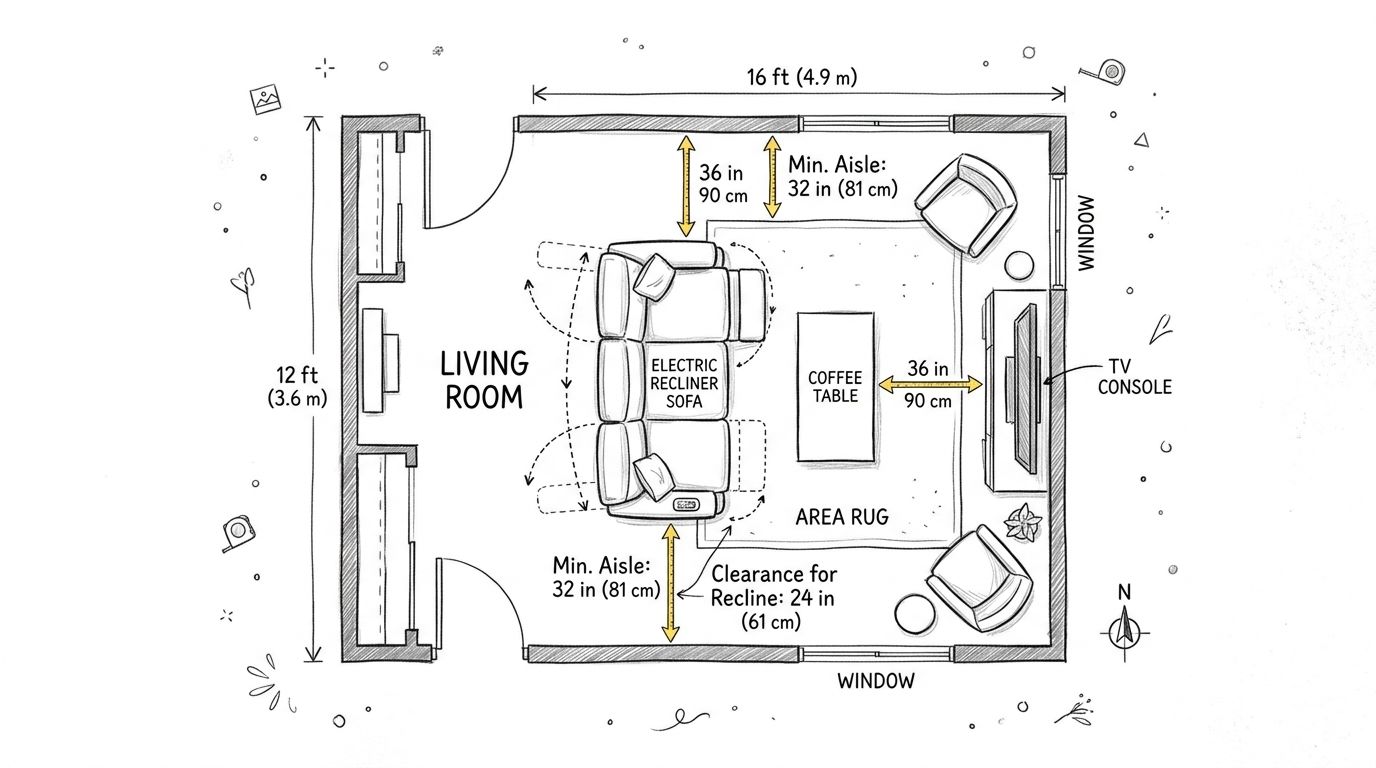
Before purchase, buyers should measure wall clearance, full-recline depth, doorway width, and path turns. A 3-seat power recliner sofa can weigh around 350 pounds, which has major implications for delivery planning and in-room placement, as noted in this power recliner sofa planning guide.
The four measurements that matter most
A tape measure used well can prevent most common fit problems.
- Wall clearance: Some reclining sofas need room behind them to open fully.
- Full-recline depth: The upright footprint is only part of the story. The sofa gets larger in use.
- Doorway and hallway width: The delivery path matters as much as the room itself.
- Corners and turns: A piece can fit through a doorway and still fail at a tight interior turn.
Buyers planning a whole room can also use living room furniture layout guidance to think through traffic flow, table spacing, and viewing angles before committing to a particular footprint.
Why delivery planning deserves real attention
Large reclining furniture isn't just heavy. It's awkward in the way many upholstered pieces are awkward. Weight distribution, mechanism placement, and room access all matter.
Readers who want a broader moving and handling perspective may find it useful to compare loading and unloading costs while thinking through the labor involved in substantial furniture moves.
Measure the room where the sofa will live. Then measure the path the sofa must travel to get there. The second step is where many mistakes happen.
A practical room-check routine
A simple pre-purchase walkthrough helps:
- Stand where the sofa will go and mark the footprint with painter's tape.
- Add extra space for full reclining.
- Walk the route from entry door to room.
- Note ceiling lights, narrow turns, railings, and nearby tables.
- Check where power access sits in relation to the sofa's final position.
For households using online shopping first and showroom visits second, this step creates far better conversations with in-store associates. Instead of asking whether a sofa is “too big,” buyers can ask whether a specific model works within a measured room plan.
Tailoring Your Sofa with Our Special Order Program
A floor sample is useful for testing comfort, but it rarely represents the final answer for a home with its own colors, routines, and wear patterns. Customization changes the conversation from “Will this work?” to “How should this be built for this room?”
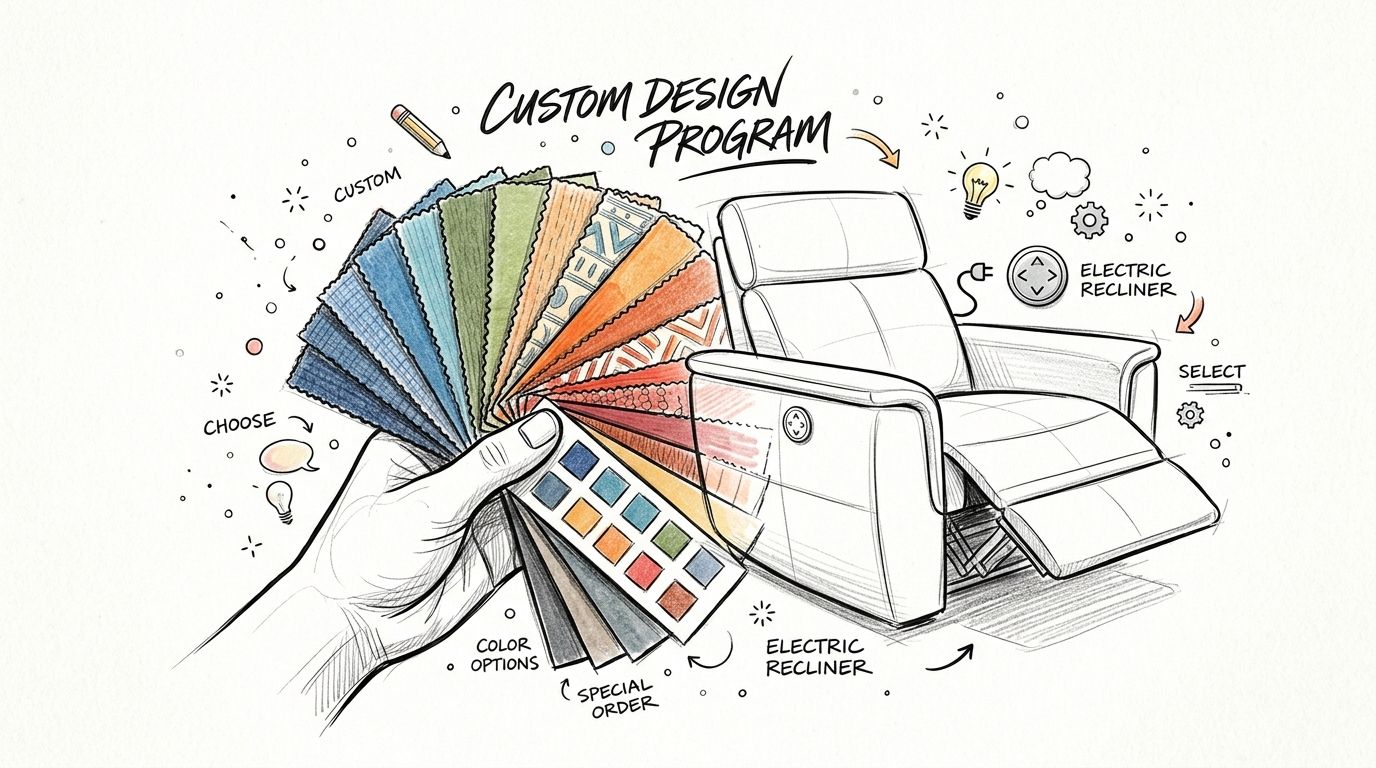
That's why a Special Order Program matters. Many vendors support personalized choices in fabrics, leathers, finishes, and comfort details. For a homeowner trying to match a coastal palette, a traditional study, or a family room used every evening, those options can make the difference between a sofa that merely fits and one that belongs.
A helpful starting point for this process is getting started with custom order, which outlines how custom furniture decisions usually come together.
Why custom ordering often leads to better long-term satisfaction
Customization isn't about making a sofa more complicated. It's about removing compromises.
A household with children may prioritize a more forgiving fabric. A vacation property may need a finish and upholstery combination that handles intermittent but heavy guest use. A formal living room may call for a more refined leather and a cleaner silhouette.
Details that often deserve customization
- Fabric or leather selection: This affects appearance, maintenance, and how the sofa feels in the local climate.
- Color direction: The right tone can support coastal brightness, traditional depth, or transitional balance.
- Comfort preference: Some buyers want a more supportive sit. Others prefer a softer landing.
- Style elements: Arm shape, silhouette, and finish choices can shift the sofa from casual to refined.
Trusted brands make customization easier to navigate
Several established furniture makers are known for offering broader choice within upholstered seating. In many homes, names such as La-Z-Boy, Smith Brothers, and Lexington come up because they help buyers shape a more personal final result instead of settling for a one-size-fits-all floor model.
For shoppers in South Georgia and North Florida, that flexibility is especially useful. Coastal homes, family homes, and second homes often need different upholstery logic even if the overall room size is similar.
The smartest custom choice is usually the one that reflects real household habits. Pets, sunlight, weekend guests, and daily lounging should shape the fabric book as much as color preference does.
Digital tools can help before a showroom visit too. Style quizzes narrow aesthetic direction, and associates can then translate that style language into actual swatches, finishes, and comfort choices in person. The online catalog starts the process. The showroom refines it.
The Lott's Furniture Ownership Experience
The test of an electric recliner sofa begins after it's placed in the home. Delivery quality, setup care, inspection standards, and service clarity all shape whether ownership feels smooth or stressful.
Industry data indicates that motion mechanisms are among the top failure points in reclining furniture, which is why guidance on motor quality, warranty details beyond the frame, and access to service matters so much, as discussed in this perspective on reclining furniture ownership considerations.
Delivery is part of the product experience
A power sofa isn't a piece that should be left boxed at the front door for the homeowner to sort out later. Proper handling protects the mechanism, the upholstery, and the room it's entering.
For that reason, some buyers prioritize delivery services that include in-home placement, assembly, and function checks. One example is Lott's delivery and assembly process, which describes white-glove, in-home delivery and pre-delivery inspection standards.
What strong delivery standards should include
- Multi-point inspection: The piece should be checked before it reaches the home.
- In-room placement: Heavy motion furniture should be positioned carefully where it will live.
- Assembly and power check: Controls and reclining functions should be tested before the team leaves.
- Packaging removal: The room should feel finished, not like a warehouse drop-off.
Ownership questions buyers should ask early
Long-term satisfaction often comes down to the questions asked before purchase rather than after a problem appears.
Ask how service requests are handled. Ask what parts of the warranty cover the motion components. Ask whether the controls and motor can be accessed for repair if needed. Ask what cleaning method fits the chosen upholstery.
This isn't pessimism. It's good furniture buying.
Maintenance should be realistic, not intimidating
Most households don't want a sofa that feels delicate. They want one that fits normal life. Good upkeep usually comes down to routine upholstery care, keeping the power area clear, and noticing early signs of strain rather than ignoring them.
A practical maintenance mindset looks like this:
- Keep the mechanism area clear: Toys, cords, and loose items shouldn't collect under moving furniture.
- Use the controls gently: Pressing and releasing buttons normally is better than repeated rapid tapping.
- Follow upholstery-specific cleaning guidance: Leather and fabric don't respond to the same care methods.
- Report unusual motion early: Hesitation, noise changes, or uneven movement are worth checking sooner rather than later.
A power sofa should feel easy to live with. If warranty terms, service pathways, or setup details are murky, the ownership experience often becomes harder than it needs to be.
For many buyers, that's the deciding factor. Comfort attracts attention. Service clarity builds trust.
Find Your Perfect Electric Recliner at Lott's
Research helps, but a reclining sofa still needs to be felt. The seat height, the button placement, the support behind the knees, and the way the back settles into position are all easier to judge in person than on a screen.
That's where an online-to-showroom approach works well. A shopper can browse styles, narrow silhouettes, and compare configurations digitally, then visit Fernandina Beach, FL, to test the feel of motion seating firsthand. This gives households a cleaner path from inspiration to confident selection.
Some buyers arrive looking for a relaxed family-room sofa. Others want a more refined piece from brands such as Stressless, La-Z-Boy, or Hooker Furniture that suits a polished living space. Both paths benefit from trying the seat, discussing upholstery, and reviewing delivery logistics face to face.
For shoppers considering larger motion seating arrangements, power sectional recliner options can also help frame what's possible when a standard sofa isn't the ideal layout solution.
The strongest purchase decisions usually combine three things:
- Digital convenience: Browse the catalog and narrow preferences before leaving home.
- Expert guidance: Use style quizzes, the mattress guide, and in-store associates to refine comfort and design choices.
- Long-term thinking: Choose with delivery, maintenance, room fit, and service in mind, not just the first impression on the sales floor.
An electric recliner sofa should support daily life with less effort and more comfort. That's the upgrade.
Ready to explore an electric recliner sofa that fits the room, the climate, and the way the home is used? Visit Lott's Furniture to browse the digital catalog, start an online style consultation, or stop by the Fernandina Beach showroom for hands-on guidance from an in-store associate.