Save 50% Off MRSP on Lexington | Shop the Catalog >

Recliner Chairs for Elderly: A Smart Buying Guide


A parent who once sank into the living room chair without thinking twice will eventually pause, brace on the arms, and ask for a hand. That moment changes the conversation from decorating to daily living. A good recliner chairs for elderly purchase is not about matching the drapes, it's about whether getting up still feels natural, safe, and dignified.
For families shopping in South Georgia and North Florida, the right answer usually comes from three questions, not one. Does the chair help mobility? Does it fit the body? Does it fit the room? We treat every recliner decision that way because comfort without the right mechanics can still make standing harder, and a beautiful chair that overwhelms the room never earns its place in the home.
Lott's Furniture approaches this as an independence purchase, not a casual seating upgrade. The aging-population furniture market reflects that shift, with furniture for older adults projected to grow from USD 16.62 billion in 2026 to USD 23.48 billion by 2031, a 7.16% CAGR during 2026 to 2031, and chairs and recliners holding 34.15% of the share in 2025 in that category Mordor Intelligence. That is a serious signal, not a niche trend.
A useful reminder for families watching mobility change is the broader connection between aging and physical performance, which is why resources like the women's guide to physical aging can be helpful context before anyone buys a chair. The point is simple, older bodies deserve furniture that works with them, not against them.
Why a Recliner Matters More After 65
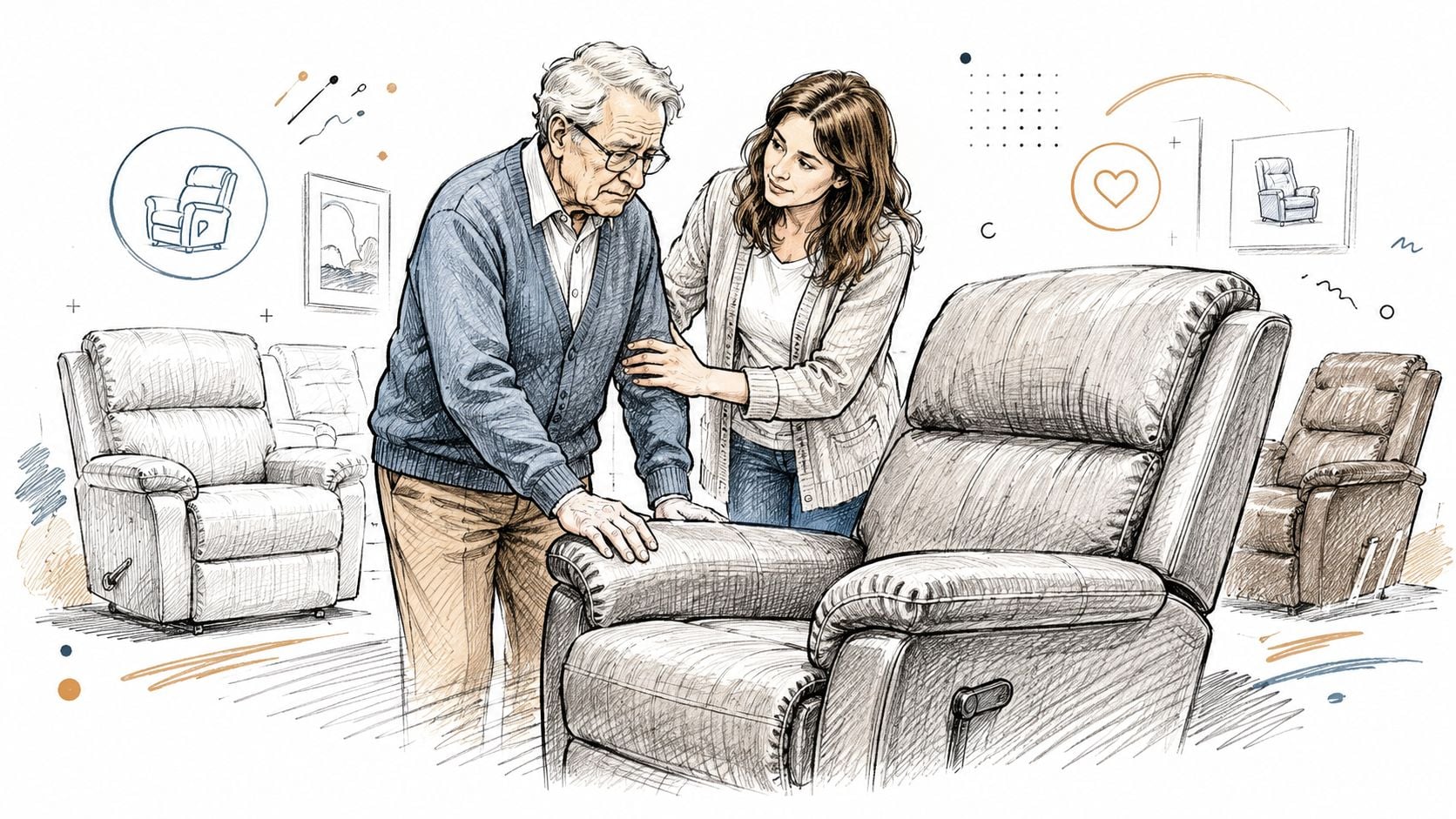
A family walks into a showroom because Mom has started picking the dining chair over the living room recliner. She keeps saying the old chair feels fine, but the trouble shows up when she tries to stand. That small avoidance pattern is where the right chair stops being a nice extra and starts doing daily work.
The buying decision comes down to three jobs, and families should judge every recliner on all three. Mobility assistance, body fit, and room constraints tell you far more than a glossy brochure ever will. A chair that helps someone rise with less strain, matches the body's proportions, and still leaves room to move through the house is doing its job. A chair that misses any one of those jobs will frustrate the whole household.
Showroom fittings make that plain fast. A recliner can look perfect online and still fail in person because the seat runs too deep, the arms sit in the wrong place, or the recline path eats up too much floor space. That is why we walk people through the chair in person, with the person who will use it, instead of letting specs make the decision for them. If the chair is being bought for a senior, the test is not whether it looks nice in a living room photo, it is whether it works for a real body in a real room.
A good recliner should make the day easier, not just softer. Families often notice the difference only after they try a few chairs side by side, and that comparison is exactly why a showroom visit matters. Seat height, arm position, back support, and the amount of space behind the chair all affect whether it will get used. Lott's Furniture treats that as a fit problem first, not a style problem, and the right fit is what keeps a chair in the home.
A careful first look at aging and physical change also helps families understand why comfort alone is never the full answer. The women's guide to physical aging is useful context for anyone trying to understand how mobility, strength, and recovery change with age. The point is straightforward, older bodies need furniture that supports the way they move now, not the way they moved years ago.
For families considering a powered option, an electric recliner sofa can make sense when the chair needs to assist standing and settling without strain. It is still worth testing in person, because a powered mechanism does not fix a poor seat shape or an awkward room layout. Function comes first, then the finish.
Lift vs Standard and Power vs Manual
The two decisions shoppers mix together are not the same thing. A chair can be lift or standard, and it can be power or manual. Those are separate questions, and if a salesperson blurs them, the family usually ends up paying for features that don't match the actual need.
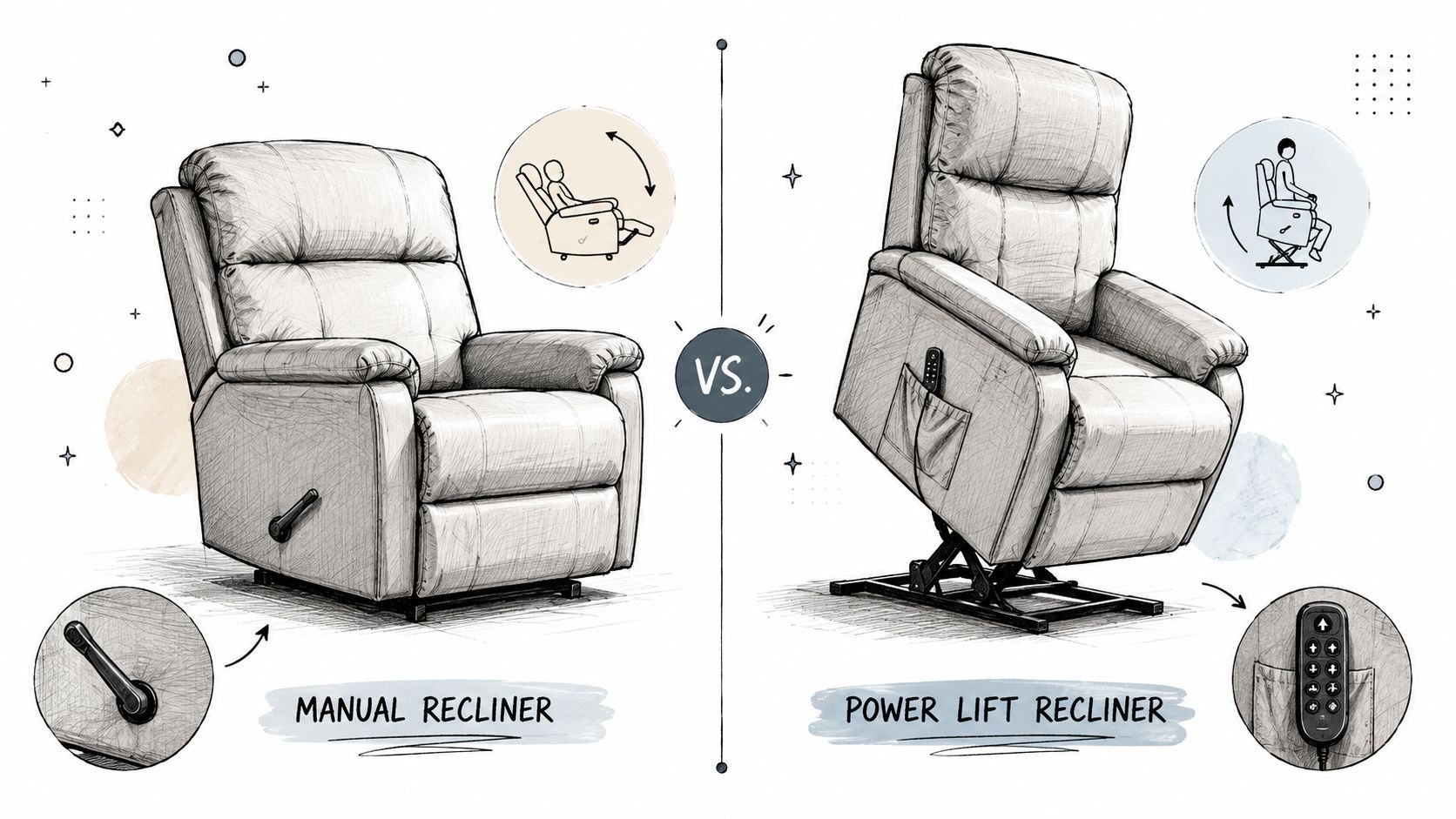
A lift recliner is a mobility aid. It uses a motorized mechanism to tilt the seat forward and reduce the biomechanical load on the knees, hips, and spine during sit-to-stand transitions Pressbooks CUNY. That matters for someone recovering from surgery, living with arthritis, or dealing with reduced lower-limb strength. It is a targeted tool, not a universal upgrade.
A standard recliner still has a place, especially when the user can stand independently but needs better seat height, firmer cushioning, or a better arm position. In that case, the family should not overbuy a lift mechanism just because it sounds more advanced. A well-built standard recliner with the right geometry often solves the problem cleanly.
Power and manual are about control
Power mechanisms help when hand strength is limited, or when the user wants smooth, precise position changes without tugging a lever. Manual recliners can still be the better fit in smaller rooms or for shoppers who prefer a simpler mechanism. The trade-off is real, though, because powered units introduce a motor block and need a little more planning around placement and clearance.
A chair should match the body first, then the room, then the feature set.
For some households, a powered recliner is the right choice without needing lift assistance at all. For others, the lift function is the entire point. The key is not to assume that every older adult needs the same solution, because that's how families end up with a chair that looks helpful but doesn't improve daily use.
One practical option in the wider category is Lott's electric recliner sofa, which shows how power mechanisms can change the sitting experience without making every seat into a medical device. The right answer still depends on the person, not the label.
Getting the Fit Right With Seat Height and Body Geometry
Fit is where most buying mistakes happen. A chair can have excellent cushioning and still be wrong if the seat height forces the knees too high, the seat depth pushes the sitter too far back, or the arms sit too low to help with standing. Comfort starts with geometry, not upholstery.
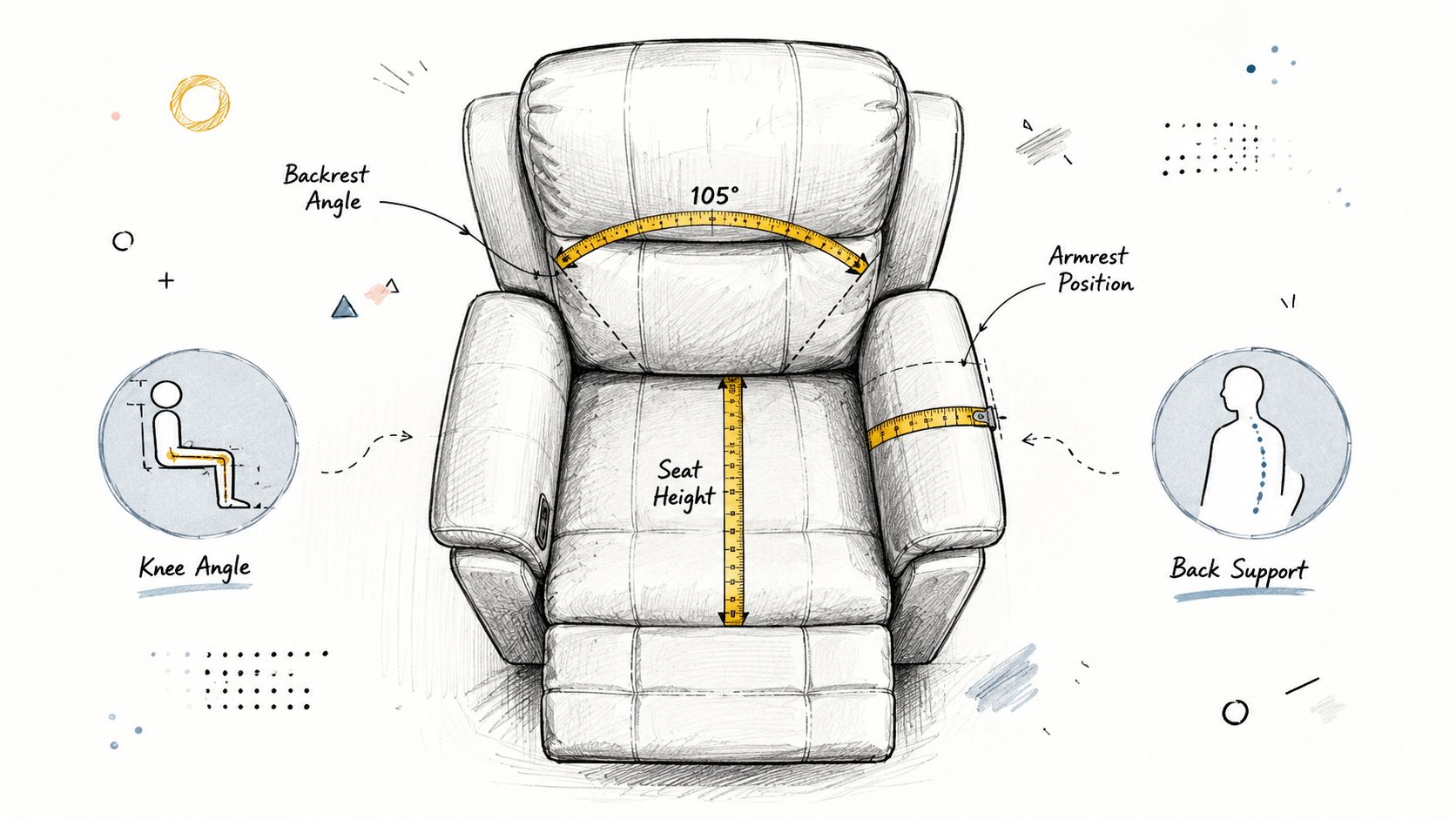
The easiest in-store test is the one families can see with their own eyes. Feet flat on the floor, knees close to 90 degrees, hips stable, and arms ready to push off. If the feet dangle, the knees are forced up, or the sitter has to rock to stand, the chair is likely wrong for that body.
The measurements that matter
Seat height is the first number to check because it affects standing effort. Seat depth matters because a seat that's too deep pushes the sitter back and makes rising harder. Back height and arm height matter too, because the head, shoulders, and elbows all need usable support instead of decorative padding.
Typical consumer-ready size ranges often run from about 4'7" to 6'3" in height and 220 to 450 lbs in weight capacity Seniorsite. Those figures are helpful because they remind families that recliners are not one-size-fits-all. A petite frame needs a different fit than a taller user, and that difference shows up fast in a showroom.
Academic research supports the practical side of that fit test. Assistive seating can reduce knee and hip joint moments during sit-to-stand transitions, which is exactly why the chair's height and transfer mechanics matter. For families, that means the right seat is not just easier to relax in, it can also reduce the effort of getting out of the chair.
For a plain-language companion on durable seating and support equipment, the Family Caregiving Kit's DME guide is a useful reference point. The lesson is the same, the body has to fit the chair, not the other way around.
In-store rule: if the sitter cannot rise without a visible struggle, keep shopping.
Safety and Comfort Features That Actually Matter
The best recliner features do one of two things: they make standing safer or they make resting more restorative. Anything else is secondary. Families get distracted by extras because they sound appealing, but the value sits in a short list of features that support older bodies every day.
A powered lift mechanism is usually the single feature that changes a chair from nice to necessary. It reduces strain during standing and sitting, and that can also lessen caregiver burden because the chair does part of the work. Beyond that, lumbar support matters because older adults tend to feel poor low-back support quickly, especially in longer sitting sessions.
Value ranking for older adults
| Feature | Value for Elderly Users | Why It Matters |
|---|---|---|
| Power lift mechanism | Very high | Helps standing and sitting with less strain |
| Proper lumbar support | Very high | Keeps the lower back from collapsing into the seat |
| Correct recline angle | High | Better rest without forcing the body into a bad position |
| Multi-motor adjustment | High | Lets the head and foot sections move independently |
| Heat or massage | Moderate | Useful for stiffness and comfort, but not essential |
| Decorative extras | Low | Nice to have, but they do not improve mobility |
Health-oriented recliner guidance notes that elevating the legs can support blood flow and help reduce swelling in the legs and feet, and that changing positions through the day can ease stiffness Repose Furniture. That is why we treat leg support as a real function, not a luxury add-on. A recliner that encourages better circulation is doing useful work.
Consumer guidance also points out that many recliners need room behind them when fully extended, so placement matters before the chair arrives Consumer Reports. A chair with the right features can still disappoint if it's jammed too close to a wall. Room planning is part of safety.
For shoppers focused on lower-back support, Lott's recliners with good lumbar support show how that feature fits into the larger comfort picture. The takeaway is plain, invest first in mechanics, support, and transfer ease.
Choosing the Right Fabric and Finish for Real Households
Upholstery has to survive the household it lives in. In South Georgia and North Florida, that means humidity, pets, grandchildren, and the occasional spilled drink. A recliner for an older adult should look refined, but it also has to take daily use without turning precious.
Performance weaves are the most forgiving choice for active homes. They're easier to live with when spills, paws, and hand lotion are part of the routine. Traditional upholstery can still work beautifully, but it makes more sense in lower-traffic rooms or in homes where the chair is used more carefully.
Leather sits in the middle for many families. Genuine leather can feel rich and age well, while performance leather gives a more manageable finish for daily use. In a coastal vacation home or a room that gets sunlight and frequent use, a cleaner finish often makes more sense than a delicate texture.
What usually works best
- Performance weaves: Best for pets, frequent use, and households that want easier cleanup.
- Leather: Best when the family wants a refined, polished look and doesn't mind more intentional care.
- Traditional upholstery: Best when the chair is part of a quieter room and the owner values a classic textile feel.
Maintenance stays simple if the family stays consistent. Blot spills instead of rubbing them, rotate cushions if the design allows it, and use arm caps or headrest covers where hands and hair do the most wear. That routine does more than many might expect.
Lott's Special Order Program matters here because many vendors support personalized fabrics, finishes, and comfort levels, which keeps the chair from looking like a generic floor sample. The stain-resistant upholstery fabric option is especially sensible for households that want elegance without constant worry.
If a family is also sorting out in-home care needs, the understanding home care needs resource can help clarify whether furniture should support independent sitting, more caregiver interaction, or both. The fabric choice should match the care pattern, not just the color palette.
What to Try in the Showroom Before You Buy
A recliner always looks better in motion than it does in a catalog, which is why the showroom test matters. Families in Fernandina Beach or Waycross should bring the person who will use the chair, not just the person paying for it. The chair has to work under real body weight, with real mobility limits, on a real floor.

Start with the basic seat test. Sit down, place both feet flat, and check whether the knees land near a natural angle. Then recline fully, because a chair that feels fine upright may crowd the room or pinch the shoulders once it opens up.
A serious tryout checklist
Test the lift or recline mechanism at full body weight.
The chair should move smoothly, not jerk or stall.Operate the hand control slowly.
Buttons should be easy to see, easy to reach, and easy to understand.Measure the clearance behind the chair.
Full recline needs room, and the wall will not forgive guesswork.Sit long enough to notice pressure points.
Ten minutes tells the truth about cushion support better than ten seconds.Check the arm height while standing up.
Arms should help the push, not force the shoulders forward.
Trying a Stressless recliner helps a shopper feel a glide-style mechanism, while a La-Z-Boy makes it easier to compare familiar cushioning and support. Smith Brothers is a strong reference point for shoppers who care about quality upholstery and custom order flexibility. Each brand feels different, and that difference is exactly why showroom testing matters.
Showroom rule: the right chair feels helpful immediately, not impressive after an explanation.
Lott's in-store associates can walk families through the Style Quizzes and the Mattress Guide before they narrow the field, which saves time and keeps the visit focused. The swivel glider recliner option is also worth a look for rooms where motion and comfort both matter. Online research gets the shortlist started, but the showroom decides the winner.
Delivery, Inspection, and Financing Without the Headaches
A recliner with moving parts should never arrive as a gamble. That's why white-glove service matters more here than it does with many other pieces. Lott's In-Home Delivery places the chair in the room of choice, sets it up, and removes the packaging, which keeps the family from wrestling a heavy, motorized seat into position on its own Furniture Delivery and Assembly.
Just as important, every piece goes through a rigorous multi-point inspection before it reaches the customer. That matters because lift mechanisms, motors, and moving frames need more than a visual check. A chair used every day should arrive ready to work, not ready for a return.
Why this changes the purchase
- Reduced risk: Inspection catches problems before delivery day.
- Less stress: Setup happens in the home, not in the driveway.
- Better fit: The chair can be positioned where the walker, side table, and outlet all make sense.
- Smarter spending: Financing tools online help families choose investment-quality seating without forcing a rushed decision.
The practical value of financing is simple, it gives the family room to buy the right chair instead of the closest chair. A durable, well-fitted recliner is easier to justify when the alternative is replacing a worn-out one too soon. That is especially true for families who want the chair to become part of the home, not a temporary fix.
A local purchase also makes warranty and service conversations easier because the store that helped with selection is still there after delivery. For a seat that gets used every day, that relationship is worth a lot more than a vague discount.
Choosing the Right Recliner for Your Family
The decision comes back to three jobs, and they should stay in that order, mobility assistance, body fit, room constraints. If standing is the main challenge, a lift recliner is the right call. If standing is fine but the current chair feels awkward, a standard recliner with the right seat height and support may be enough.
Smaller spaces need smaller-scale solutions, especially in apartments and vacation homes where a full-size recliner can take over the room. Families who want a more refined finish, or who need very specific comfort choices, should look at custom order options from brands such as La-Z-Boy and Smith Brothers. That's where the Special Order Program earns its keep.
Lott's Furniture serves South Georgia and North Florida with the kind of hands-on guidance that keeps this purchase honest. Use the Style Quizzes and Mattress Guide online, then come into the showroom in Fernandina Beach or Waycross to sit, compare, and make the choice with confidence. The chair should feel right before it ever reaches the living room.
If a recliner has to support daily standing, the fit needs to be tested in person, not guessed from a photo. Lott's Furniture offers in-store guidance, custom order options, and white-glove delivery that helps families choose with confidence and live with less strain. Visit Lott's Furniture to browse the digital catalog, start a style consultation, or plan a showroom visit in Fernandina Beach or Waycross.


