How to Choose a Mattress for Back Pain: An Expert Guide

A sore back first thing in the morning changes the whole day. Plenty of people across South Georgia and North Florida know that routine too well. They swing their feet to the floor, stand up slowly, and wonder whether the problem is age, stress, an old injury, or the mattress that felt “fine enough” years ago.
Most of the time, the mattress question gets answered with bad advice. People are told to buy the hardest bed they can tolerate, or they order online based on a firmness label that means almost nothing without context. That's how shoppers end up with a mattress that feels impressive for five minutes and miserable by week two.
The Search for a Pain-Free Morning
A mattress that's contributing to back pain usually doesn't fail all at once. It starts with subtle signs. A little stiffness after waking. More tossing and turning. A spot in the middle that feels lower than the rest. Then the body begins compensating all night long, and morning becomes a daily reset nobody asked for.
For many households, frustration centers on uncertainty. They don't know whether the bed is worn out, whether their sleep position has changed, or whether the pain points to something beyond sleep setup. That's why practical guidance matters more than marketing language. Resources on Joint Ventures Physical Therapy for back pain can help readers think more broadly about how movement, posture, and recovery fit into the picture.
A worn mattress is often hiding in plain sight. If the bed has visible sagging, if one sleeper rolls toward the center, or if pain improves after a night away from home, the mattress deserves serious scrutiny. Readers who are trying to sort out those clues can review signs that indicate it's time to replace a current mattress.
A pain-free morning usually starts with one simple question. Does the mattress keep the spine steady, or does it force the body to fight for support all night?
The right mattress doesn't just feel pleasant in a showroom. It reduces strain, supports neutral alignment, and cushions the body where pressure builds. That's the difference between a bed that looks good on paper and one that helps someone wake up looser, steadier, and more rested.
Understanding Support vs Firmness for Spinal Health
Most mattress shoppers confuse support with firmness. That mistake costs them sleep.
Support is the mattress's ability to keep the spine in a neutral position. Firmness is how the mattress feels when the body first lies down. A mattress can feel plush on top and still offer excellent support underneath. Another can feel very hard and still do a poor job of holding the body in healthy alignment.
Why harder isn't automatically better
The old “hard bed for a bad back” rule is outdated. A 2021 systematic review in Healthcare concluded that medium-firm mattresses “promote comfort, sleep quality and rachis alignment,” and patients did better for pain and disability than those using firmer alternatives in the studies reviewed, according to the systematic review in Healthcare.
That finding lines up with what seasoned mattress shoppers eventually learn in person. If a mattress is too hard, the shoulders and hips can't settle properly. If it's too soft, the midsection sinks and the spine drifts out of line. Back pain usually improves in the middle ground, not at the extremes.
A simple way to think about it
Think of support as the frame of a well-built house and firmness as the upholstery on the sofa inside it. The structure has to hold. The surface has to feel right. One doesn't replace the other.
A smart mattress search starts with these checkpoints:
- Check spinal position: The spine should feel level and unforced, not bowed or twisted.
- Notice pressure areas: Shoulders, hips, and lower back shouldn't feel jammed against the mattress.
- Ignore labels alone: “Firm,” “medium,” and “plush” aren't standardized. Two mattresses with the same label can feel completely different.
People who are still sorting out comfort layers often benefit from understanding choosing the right bedding layer, especially if they're trying to tell the difference between a mattress problem and a surface-comfort problem.
Practical rule: Buy for neutral alignment first. Buy for feel second. If the order gets reversed, the back usually pays for it.
Shoppers who want a clearer breakdown of this distinction can review what nobody tells you about mattress firmness before you buy. It helps translate fuzzy showroom language into a decision that supports the body.
Tailoring Your Choice to Your Sleep Position and Body Type
A mattress can feel great for five minutes and still be wrong for your body. Back-pain shoppers run into that problem all the time, especially after reading broad online advice that treats every sleeper the same.
Start with two facts. Your sleep position changes where pressure builds. Your body type changes how far you sink and how much support you need back. If you miss either one, comfort usually falls apart by the end of the night.
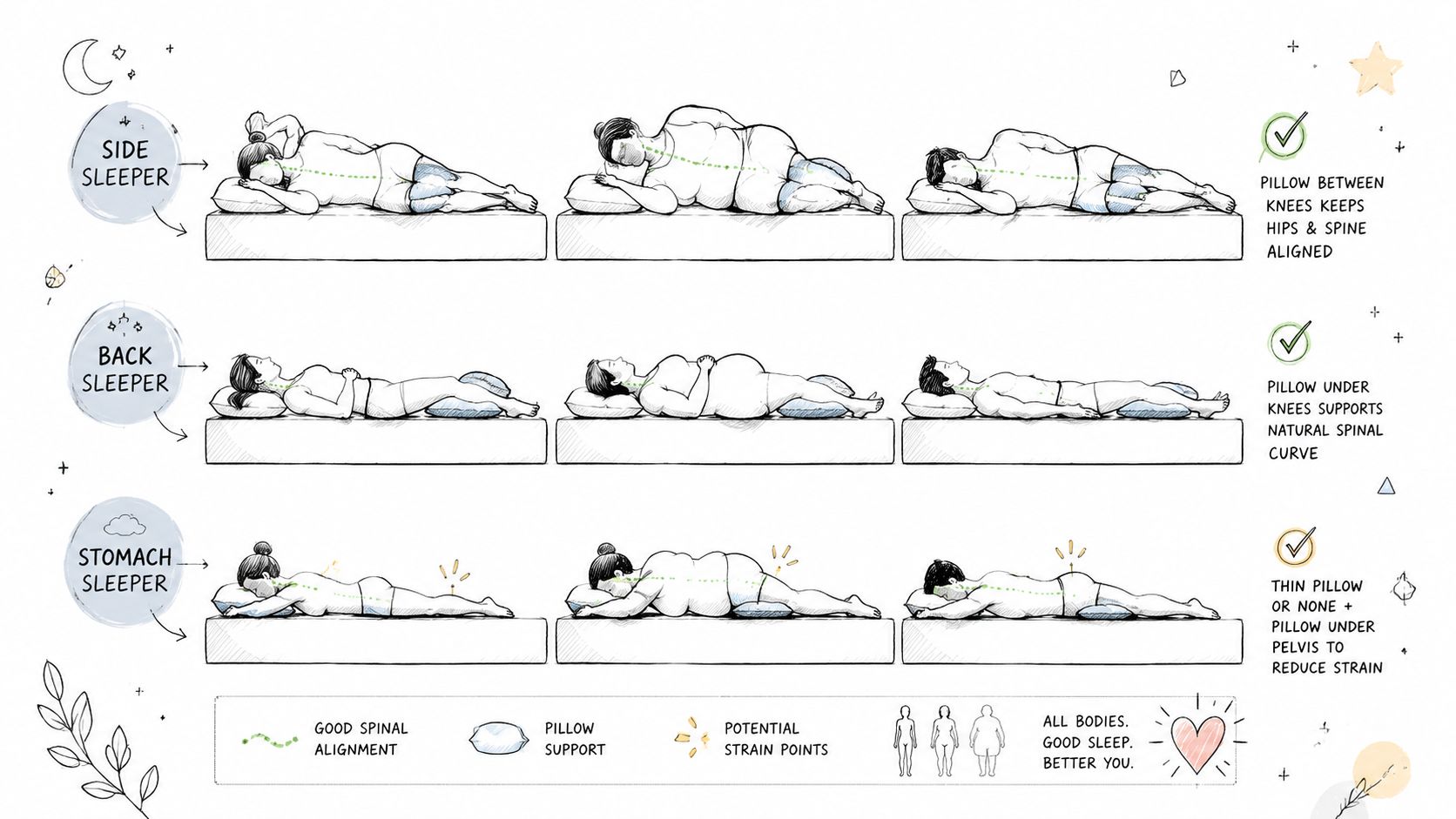
Sleep position changes what “comfortable” should mean
Side sleepers usually need more pressure relief at the shoulders and hips. If the surface is too firm, those joints get pushed up, and the spine often ends up crooked.
Back sleepers usually do better with a steadier, more even feel. The mattress should support the hips and lower back without letting the midsection sag.
Stomach sleepers need the strongest pushback of the three. If the torso sinks too far, the lower back gets forced into an unhealthy curve.
That is why “medium-firm” by itself is not a buying plan.
Body type changes how the same mattress performs
A lighter sleeper often stays closer to the surface and may need more cushion to get pressure relief. A heavier sleeper presses deeper into the comfort layers and usually needs a sturdier build to keep the body level. The mattress has to hold the sleeper in neutral alignment in the sleeper's actual sleeping position, not just in theory.
Here's the practical framework we use on the showroom floor:
| Sleeper profile | What usually works |
|---|---|
| Side sleeper with a lighter build | A softer comfort surface with enough underlying support to keep the spine straight |
| Back sleeper with an average build | A medium-firm feel with steady support through the lumbar area |
| Stomach sleeper or heavier sleeper | A firmer, more supportive feel that keeps the torso from sinking too deeply |
Online research can point you in the right direction. It cannot tell you how far your shoulder drops, whether your hips stay level, or whether a mattress feels supportive after ten full minutes instead of thirty seconds. That part has to be tested in person.
At Lott's, shoppers can lie down in their normal sleep position and get guided feedback from an associate who has watched thousands of mattress fittings over the years. That hands-on step is what turns vague internet advice into a confident decision. If you want a closer look at build-specific recommendations, which mattress is right for your body type is a useful guide before you come in.
The right mattress matches the sleeper's frame, sleeping posture, and pressure points.
Pain does not always stay in the lower back, either. Discomfort that runs into the hips or legs can muddy the picture, so understanding leg pain when lying down can help shoppers sort out whether they are dealing with mattress mismatch, a pressure issue, or something that needs medical attention.
Exploring Mattress Materials for Back Pain Relief
Material matters because it shapes how support is delivered. Two mattresses can share the same firmness label and feel completely different once the sleeper settles in.
That's why material selection should be tied to the kind of back-pain relief a shopper needs. Some people need deeper contouring. Others need stronger lift, easier movement, cooler sleep, or better edge stability.
How the major mattress types behave
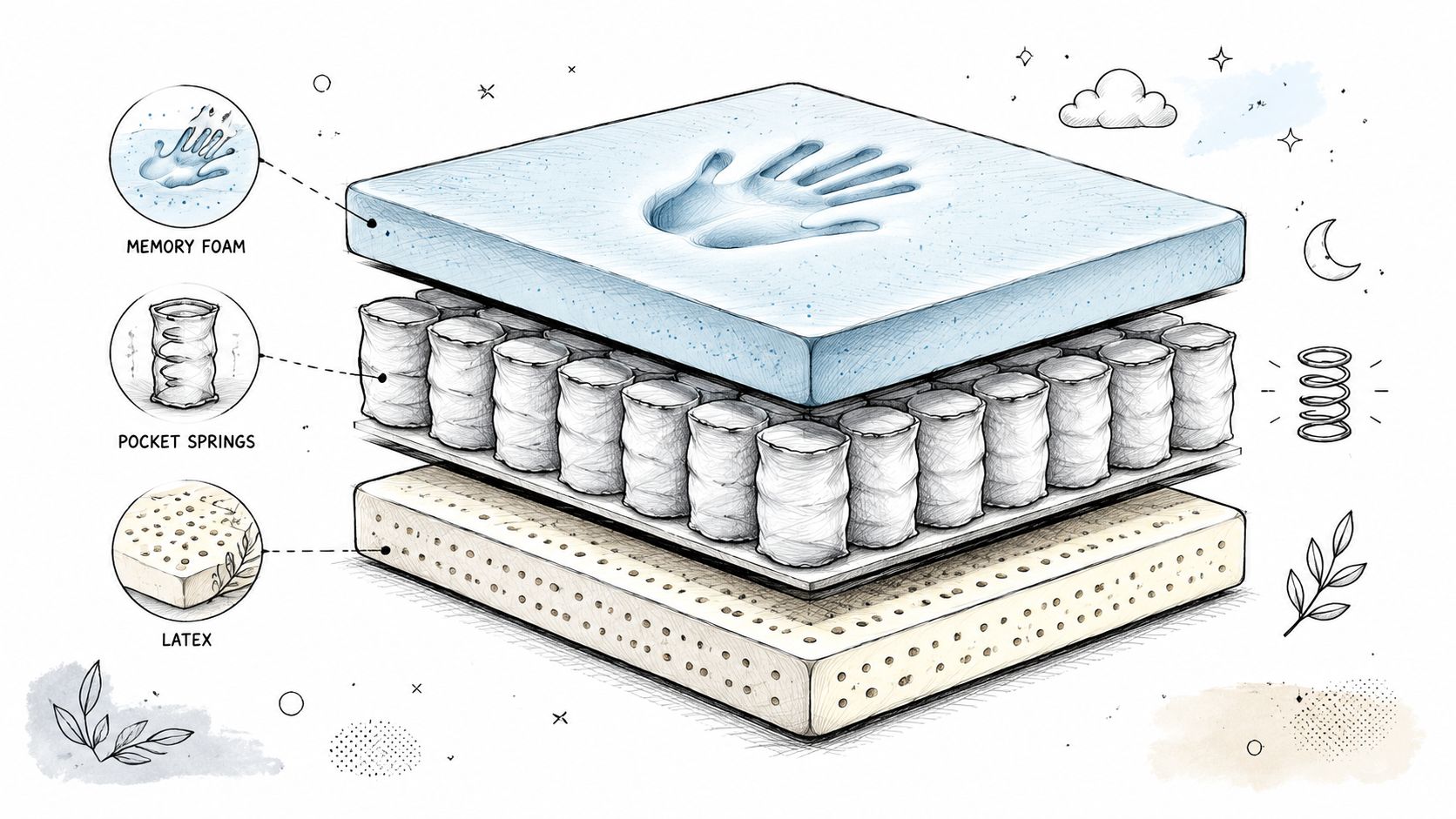
Memory foam tends to contour closely. That can help distribute pressure and reduce the sharp pushback that bothers sore hips, shoulders, and lower backs. It often suits sleepers who want a more cradled feel.
Innerspring mattresses usually feel more traditional and responsive. They can make moving around in bed easier, and many sleepers prefer that lifted sensation over a deeper hug.
Hybrid designs blend foam comfort layers with coil support. For many back-pain shoppers, hybrids hit the sweet spot because they combine pressure relief with a stronger support core.
A quick comparison helps:
Memory foam
Best for sleepers who want contouring and motion control
Can ease pressure points effectively
Needs strong underlying support to avoid sagging over time
Innerspring
Best for sleepers who like bounce and easier repositioning
Often feels more breathable and traditional
Comfort depends heavily on the top layers, not just the coils
Hybrid
Best for shoppers who want balanced support and cushioning
Often works well for mixed sleep positions
Usually offers a more fine-tuned blend of comfort and structure
Don't ignore the foundation under the mattress
A good mattress can fail on a bad base. That's one of the most common and expensive mistakes shoppers make. Guidance on mattress support systems warns that slats shouldn't be more than 3 inches apart, and shoppers should look for a warranty of 10 years or more as a sign of durable construction, according to this foundation and warranty guidance.
That matters because sagging underneath can mimic a bad mattress, worsen alignment, and shorten the life of an otherwise sound sleep set.
What to inspect before buying
- Look at edge support: Stronger edges help maintain a more consistent sleep surface.
- Ask about construction: Coil systems, foam density feel, and layering all affect how the mattress supports the spine.
- Check the base: Old foundations and weak slat spacing can sabotage comfort.
Shoppers comparing feel and structure can get a clearer side-by-side view from memory foam vs innerspring.
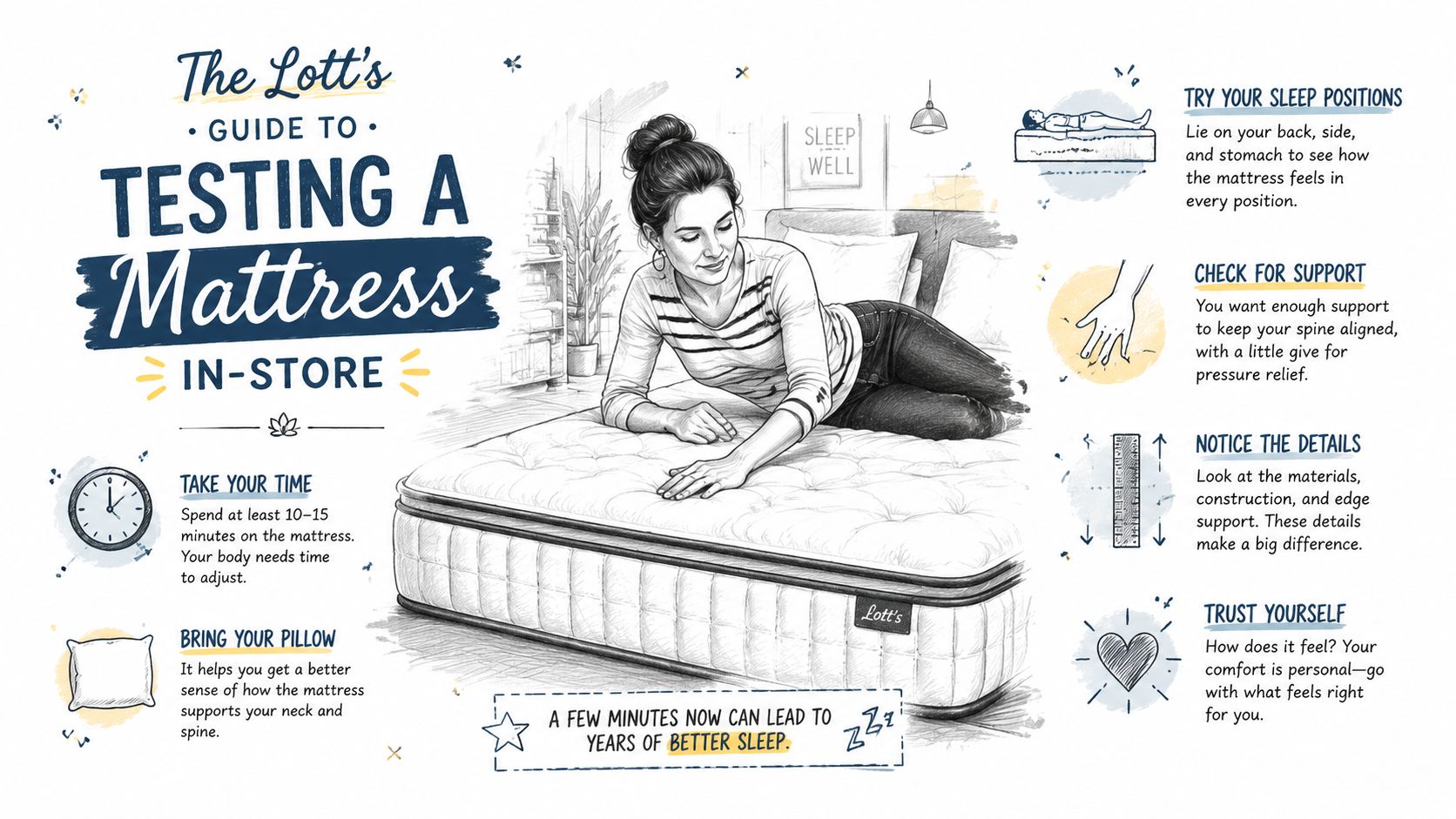
The Lott's Guide to Testing a Mattress In-Store
Online research can narrow the field. It can't tell a shopper how their back will react after several minutes in one position. That requires real testing.
A proper in-store tryout should be slow, deliberate, and a little picky. Rushing through mattresses while fully dressed, sitting on edges, and pressing down with one hand tells the shopper almost nothing.
The showroom checklist that actually works
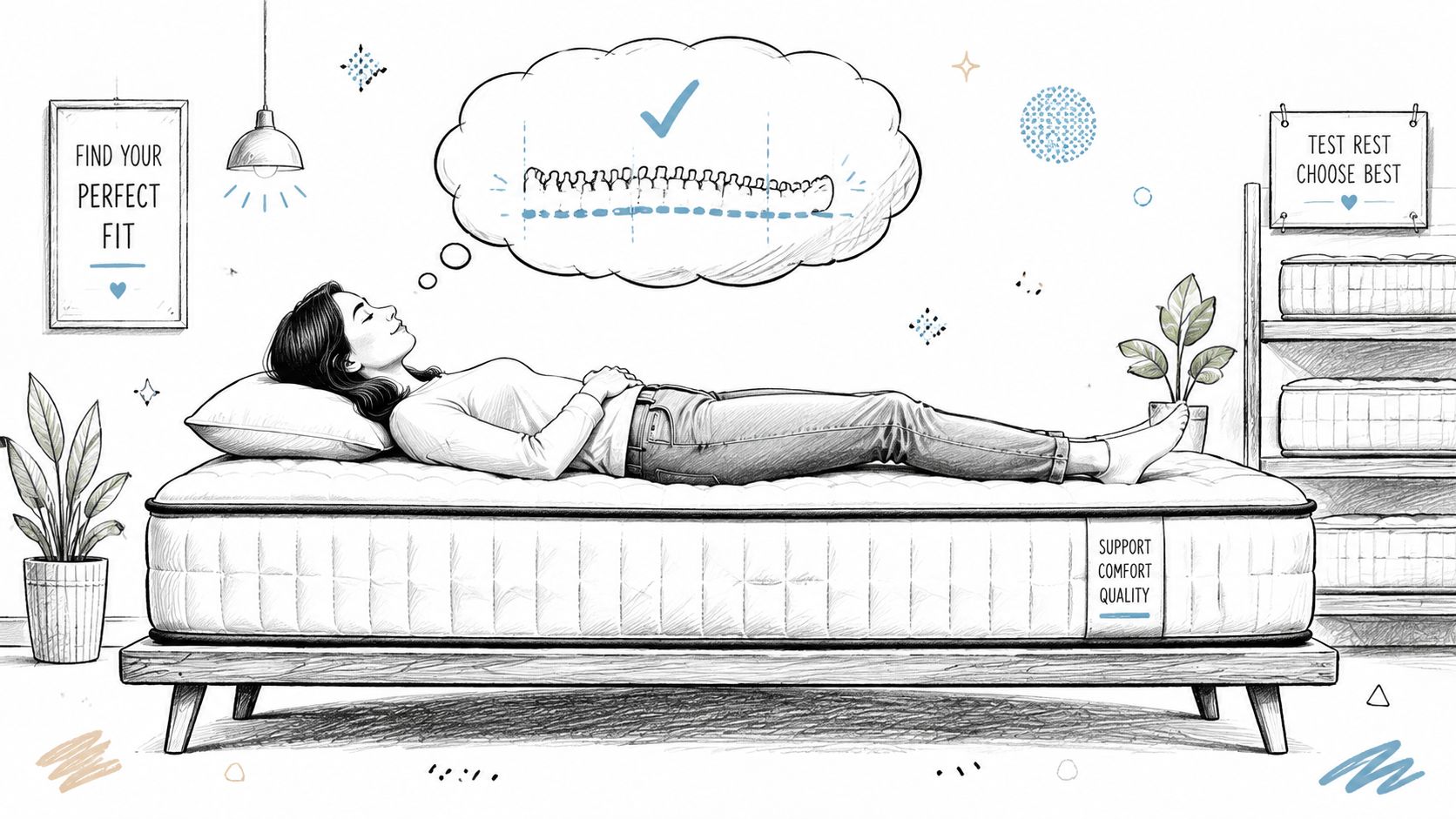
Consumer guidance recommends a 10-minute in-store test in multiple positions to check whether the spine feels neutral and whether the hips and shoulders are cradled without excessive sinking, according to this Consumer Reports mattress buying guidance.
That advice is simple and effective. Use it.
Lie down in your usual sleep position
If the shopper sleeps on their side at home, that's where the test should start. Not seated. Not propped up. Flat in the actual position that matters.Stay there long enough
Quick impressions are misleading. The body needs a few minutes to settle into the comfort layers and reveal pressure points.Rotate through other positions
Even dedicated side sleepers spend part of the night on their back or stomach. Test those transitions too.Pay attention to the lower back, hips, and shoulders
Those areas usually tell the truth first. Pinching, strain, numbness, or a floating lower back are warning signs.
What shoppers should feel
A good mattress for back pain usually creates this response:
- The spine feels settled: No sense of bowing, hammocking, or twisting
- The pressure points calm down: Shoulders and hips don't feel jammed
- Movement feels manageable: The sleeper can turn without fighting the surface
If a mattress feels “not bad” in the showroom, that's not enough. For a sore back, the right mattress should feel clearly supportive.
Many shoppers also benefit from using digital tools before they arrive. Style quizzes, mattress guides, and digital catalog browsing help narrow options before a showroom visit in Fernandina Beach, FL. Then the in-store associate can refine the choice with hands-on testing. Readers preparing for that visit can use tips for buying a new mattress as a practical checklist.
Beyond the Purchase: Trial Periods and Our Delivery Standard
The test starts after the mattress is in your bedroom.
A shopper can lie on a bed in the showroom, feel good about it, and still need a few weeks at home to know whether the support holds up through a full night, a rushed weekday, and a stiff morning. That is why a trial period matters so much for back pain. Sleep experts at the Sleep Foundation explain how trial periods give sleepers time to judge comfort and support under normal conditions, not just during a short visit.
Replacement timing matters too. A mattress does not have to look terrible to stop supporting the spine well. Over time, foams soften, coils lose consistency, and body impressions start changing how the back rests overnight. The Sleep Foundation's mattress replacement guidance notes that mattress lifespan varies by material and wear, which is exactly why shoppers should pay attention to performance, not just age. If morning pain has been building, the mattress deserves a hard look.
Delivery decides whether a good choice stays a good choice. A mattress should be set where it belongs, checked for condition, and matched to the proper foundation or base. Poor setup causes avoidable problems, especially for households already dealing with back pain.
At Lott's, that part still gets handled the old-fashioned way. People who know furniture bring it in, place it correctly, and make sure the bed is ready for use. That gives shoppers in South Georgia and North Florida something online research cannot provide on its own. You can narrow the field with articles and reviews, then come into the showroom, test the feel with guidance, and have the final setup handled with care in your home.
That full process usually leads to fewer regrets and better mornings.
Frequently Asked Questions About Mattresses and Back Pain
Shoppers usually ask the same handful of questions once they get serious. The right answers are practical, not flashy.
Common concerns people bring into the showroom
Some worry they need the firmest mattress available. Others assume any new mattress will solve the problem. Neither idea holds up well in real life. Mattress choice can help a great deal, but it has to fit the sleeper's body, position, and pain pattern.
Persistent pain also deserves perspective. A new mattress can improve nonspecific low back pain, but persistent, severe, or atypical pain may point to an underlying medical issue, according to this guidance on when a medical evaluation matters.
Some back pain is a mattress problem. Some isn't. Smart shoppers know the difference matters.
Common Mattress & Back Pain Questions
| Question | Our Expert Answer |
|---|---|
| Should a person with back pain always buy medium-firm? | Medium-firm is the strongest starting point for most shoppers, but it isn't universal. Sleep position and body type still decide the final fit. |
| Is a topper enough to fix back pain? | Sometimes a topper can improve surface comfort, but it can't repair a worn-out support core or a failing foundation. |
| How can a shopper tell if the mattress is the real problem? | Clues include sagging, worsening morning stiffness, and better sleep away from home. If symptoms are severe or unusual, a medical evaluation makes more sense than guessing. |
| Are side sleepers supposed to choose a softer bed? | Usually yes, at least on the comfort surface. Side sleepers need cushioning at the shoulders and hips, but still need enough support to keep the spine neutral. |
| Does in-store testing really matter? | Absolutely. A mattress has to be felt in the sleeper's real positions. Labels and reviews can't replace that. |
A mattress purchase should feel informed, not confusing. Shoppers in South Georgia and North Florida usually do better when they combine digital research, style tools, and mattress guides with in-person testing and associate feedback in a showroom.
For personalized help finding the right mattress, shoppers can explore the digital catalog, use the style quizzes and Mattress Guide, or schedule an online style consultation with Lott's Furniture. Those who prefer hands-on testing can visit the showroom in Fernandina Beach, FL and work through comfort levels, materials, and Special Order options with an in-store associate. White-glove, in-home delivery and a rigorous multi-point inspection complete the process with the level of care homeowners expect across South Georgia and North Florida.